Best Materials for Strong and Durable Structures
Ask a builder what the strongest material is and you will get a quick answer. Ask what the most durable one is and the answer slows down, because durability is not a property of a material on its own. It is a property of a material in a particular climate, detailed a particular way, and looked after — or not — for fifty years. A steel beam that outlives the building in a dry interior rusts through in a decade if it sits in a damp wall. A timber frame that rots in a leaking cavity lasts centuries if it stays dry.
This guide looks at the four material families that carry most of the load in houses and small buildings — reinforced concrete, clay brick and block masonry, structural steel, and engineered timber — and compares them on the questions that actually decide a project: how they carry load, how far they span, how they behave in a wet climate, what they ask for over fifty years, and what drives their cost.
Key Takeaways
- Strength and durability are different questions. Concrete and steel win on raw strength; masonry and well-detailed timber are often the easier materials to keep sound for fifty years.
- Every one of the four fails through water, not load. Rust in steel, corroded reinforcement in concrete, frost damage in brick, rot in timber: the detail that keeps water out matters more than the material's headline strength.
- Span decides the material more often than strength does. Steel and glued timber beams open up long rooms; masonry wants walls, not wide openings.
- Cost is driven by labour and speed as much as by the material: a factory-made timber panel or steel frame goes up in days, a masonry shell in weeks.
- Most good buildings mix them: a concrete slab, masonry walls, a steel beam over the wide opening and a timber roof is the ordinary house of northern Europe for a reason.
How each material carries load
Each family has a shape of strength, and the shape dictates where it is used.
Reinforced concrete is strong in compression and weak in tension, so steel bars are cast inside it to take the pulling forces. The combination carries anything: columns, slabs, retaining walls, foundations. It is poured, so it takes any shape the formwork gives it, and it is heavy, which helps it resist movement and dampen sound.
Clay brick and block masonry is also a compression material: it carries weight straight down through the wall. It does not like being pulled or bent, which is why a masonry wall needs a lintel of steel or concrete over every opening and why openings stay modest. Its strength comes from mass and from the bond pattern that ties the units together.
Structural steel is strong in both tension and compression, and far stronger for its weight than anything else on this list. That lets a slim beam carry a floor across a wide room, or a frame of columns and beams carry a whole building with the walls doing no structural work at all.
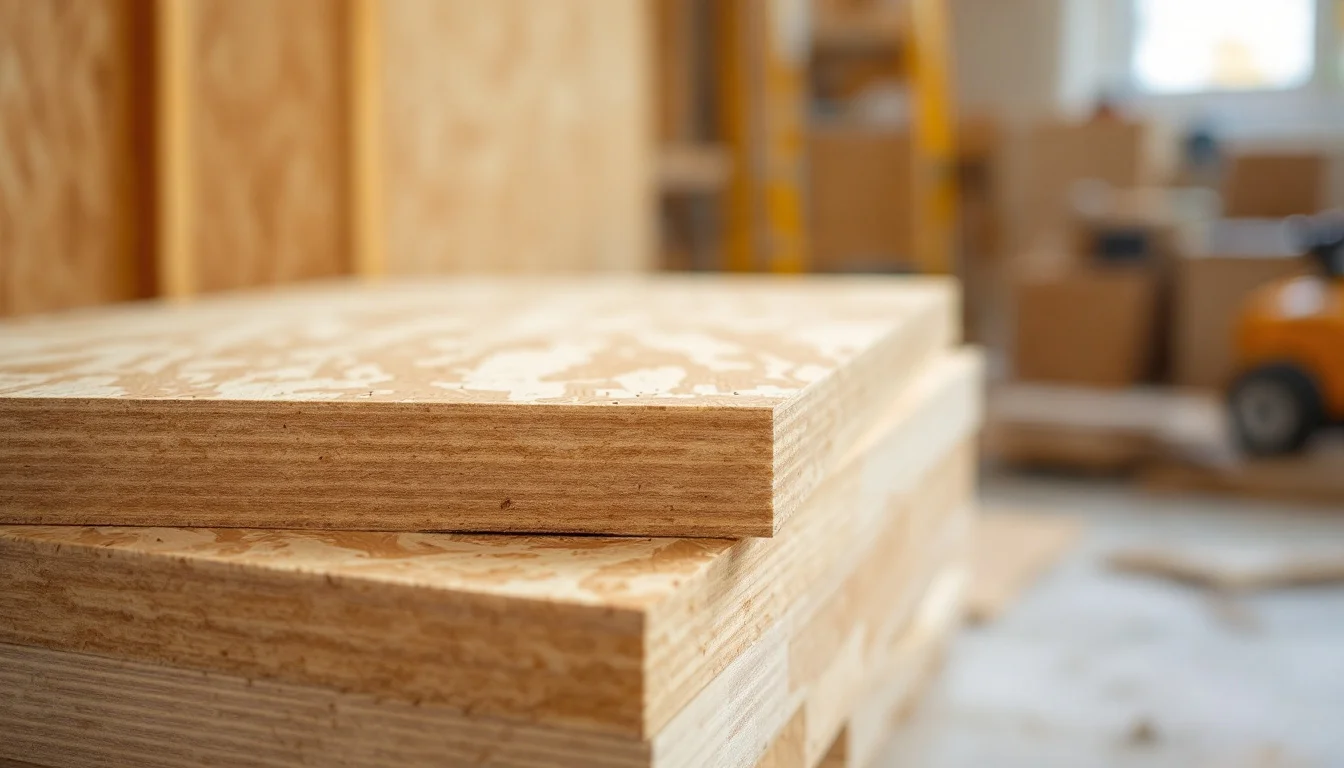
Engineered timber — glued laminated beams, laminated veneer lumber, cross-laminated panels — takes ordinary softwood and removes its weaknesses by gluing layers so the defects of one are bridged by the next. The result spans further and more predictably than sawn timber, and cross-laminated panels work as whole walls and floors rather than as a frame of sticks.
Span: the question that usually picks the material
For most projects the deciding question is not "how strong" but "how far". A room with a wall every four metres can be built from anything. A room that wants twelve metres of open floor cannot.
| Material | Comfortable span for a floor or roof | What limits it |
|---|---|---|
| Masonry (walls) | Walls at short intervals; openings bridged by lintels | Cannot span on its own; depends on the lintel or slab above |
| Reinforced concrete slab | Medium spans between walls or columns | Self-weight grows fast with span; needs formwork and propping |
| Engineered timber beam or panel | Medium to long spans with deep sections | Depth of beam; needs to stay dry |
| Structural steel beam | Long spans with slim sections | Fire protection; connections; corrosion protection |
That table explains why a typical renovation that knocks two rooms into one ends with a steel beam: nothing else carries the floor above across the new opening with so little depth. It also explains why a self-build that wants a big open living space often ends up with a steel or glued-timber frame inside a masonry or timber-panel envelope.
Durability in a wet climate: what each material is afraid of
In a mild, wet climate — long grey winters, rain from every direction, freeze and thaw a few times each year — the enemy of every material is the same. Water.
Concrete is durable as long as the steel inside stays protected. The concrete around the bars is alkaline, which keeps them from rusting; water carrying salts or acids slowly neutralises that protection, and once a bar rusts it swells and cracks the concrete around it. The defence is simple: enough concrete cover over the bars, a dense mix, and no standing water on flat surfaces.
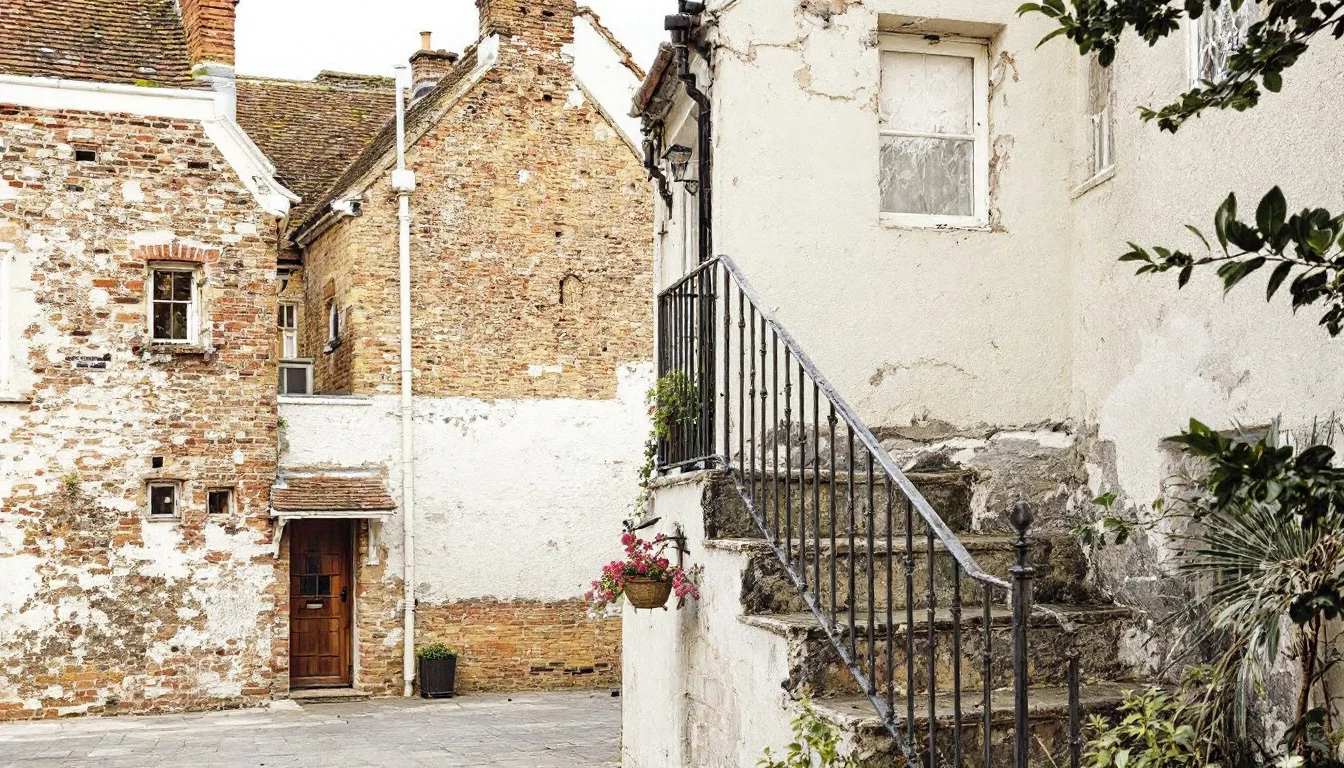
Masonry is afraid of frost. A brick that soaks up water and then freezes spalls — its face flakes off. Well-fired clay bricks with low absorption shrug this off for centuries; soft or under-fired bricks, and mortar joints that are too hard for the brick, do not. The details that matter are copings on top of walls, drips under sills, and a cavity that actually drains.
Steel is afraid of damp air. Unprotected steel in a dry heated interior barely changes; the same steel in a ventilated cavity, a cold roof space or an external wall rusts. Galvanising, paint systems and keeping it inside the insulated envelope are the three answers, and the choice between them is a detailing decision made before the steel is ordered.
Timber is afraid of staying wet. Timber that gets wet and dries out again is fine; timber that stays above a moisture level fungi can live on rots. A dry, ventilated frame lasts as long as the building; a frame in a leaking cavity, or sitting on a damp slab without a barrier, does not. Glued products add one more rule: the glue must be specified for the exposure, and panel edges must be kept out of the weather.
The common thread: none of these failures comes from the material being too weak. All of them come from a detail that let water in and a path that did not let it out.
Maintenance over fifty years
Over fifty years the materials swap places. The ones that look most permanent on day one are not always the easiest to keep sound.
- Masonry asks for the least: repointing of mortar joints once or twice in fifty years, a check of copings and flashings, and little else. Its failures are slow and visible.
- Timber asks for vigilance rather than work: keep the envelope watertight, keep ventilation paths open, and inspect anywhere water could reach. If it stays dry, there is nothing to do.
- Steel asks for its protection to be renewed. Painted steel exposed to weather is a recoating job on a cycle; galvanised or enclosed steel is close to maintenance-free. The hidden risk is steel nobody can see — a beam built into a damp wall — which is why it should be protected before it is built in.
- Concrete asks for the least attention while it is sound and the most when it is not. Cracks that let water to the reinforcement should be sealed early; once rust has started, repair means cutting back and recasting, which is expensive.
What drives the cost
Comparing a price per square metre across materials misleads, because the material is rarely the biggest line. Three things decide the cost of a structure:
- Labour and speed. Masonry is laid by hand, one unit at a time, and a shell takes weeks. Steel frames and timber panels arrive from a factory cut to size and go up in days, which saves site time, scaffolding hire and weather risk. Concrete sits in between: fast to pour, slow to form and cure.
- What the material makes possible. A steel beam costs more than a timber one, but if it allows a shallower floor or a wider opening, it may save elsewhere. A cross-laminated panel is expensive per cubic metre and cheap per hour on site.
- Design and fabrication effort. Steel and engineered timber need drawings and shop fabrication; mistakes cost more because they are discovered on site. Masonry and concrete tolerate adjustment as the work goes along.
Choosing: a short decision guide
- Long open spans, slim floors, a renovation that opens up a wall: structural steel, protected and enclosed.
- Walls that will stand for a century with little care, in a wet climate: well-fired clay brick or dense block, detailed to shed water.
- Foundations, basements, anything in the ground or holding it back: reinforced concrete with generous cover over the steel.
- Fast, light, warm construction, or a whole-building system that goes up in days: engineered timber, kept dry and ventilated.
- Most houses: all four, each doing the job it is best at.
Frequently asked questions
Which material is strongest? Steel, for its weight, by a wide margin; reinforced concrete, for sheer mass. But a house rarely runs out of strength — it runs out of span, or out of dry detailing.
Is timber durable enough for a wet climate? Yes, provided it stays dry. Timber frames that are kept out of the weather, ventilated and off damp ground last as long as the building. Timber that stays wet does not, whatever species or product it is.
Does concrete last forever? No. The steel inside it is the clock. With good cover and a dense mix the clock runs very slowly; with cracks, thin cover and salty water it runs fast.
Why do most houses mix all four? Because each is strong in a different way and fast in a different trade: concrete in the ground, masonry for walls, steel for the wide opening, timber for the roof.
Conclusion
The strongest structure is not the one built from the strongest material. It is the one where each material is used for the load it is good at, kept away from the water it is afraid of, and detailed so that fifty years of weather has somewhere to drain. Choose by span, detail for water, budget for the small parts that keep it dry — and the structure takes care of itself.